


Why Choose Sunshield Products for Patio Enclosures in Green Valley and Sahuarita Arizona?
- Sun Shield Products
- Dec 3, 2025
- 9 min read

Sunshield Products provides durable, US-made patio enclosures and motorized retractable patio shades designed specifically for Green Valley and Sahuarita’s sun, heat, dust, and wind. This article explains how these patio enclosures reduce solar heat gain, block UV, and extend comfortable outdoor living in Southern Arizona, then maps product choices to typical local conditions. Homeowners will learn which enclosure types fit year-round living versus seasonal enjoyment, how materials and wind ratings affect longevity, and what to expect for warranties and financing. The guide covers practical comparisons—glass patio rooms, patio screen rooms, and motorized shades—plus measurable efficiency claims and local installation considerations. Read on for product comparisons, energy-saving estimates, warranty facts, cost drivers, and step-by-step next steps for getting a free in-home estimate tailored to Green Valley and Sahuarita homeowners.
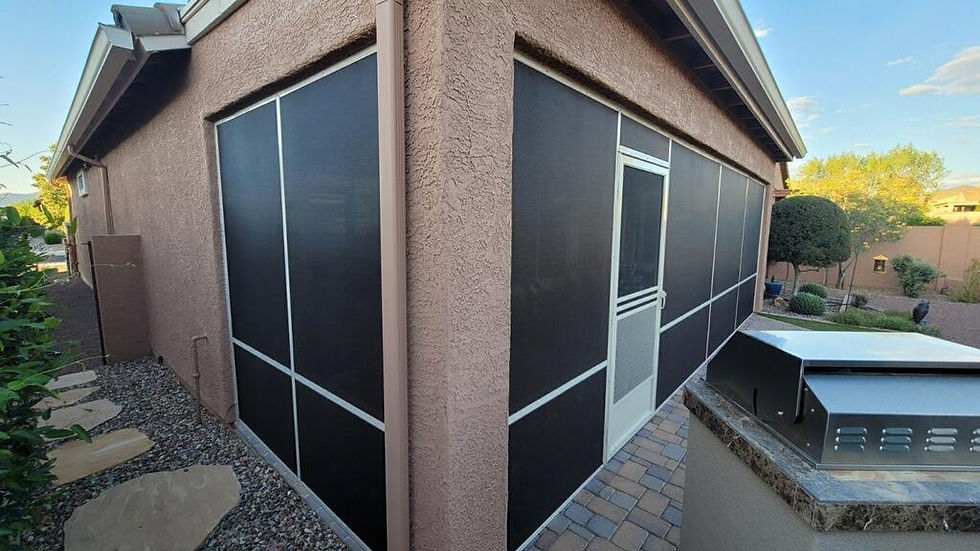
What Makes Sunshield Patio Enclosures the Best Choice for Green Valley and Sahuarita?
Sunshield patio enclosures are built to address Southern Arizona’s combination of intense sun, daytime heat, dust, and occasional high winds by pairing high-performance materials with climate-aware design. These systems reduce direct solar gain through shading and insulated glazing, protect outdoor furniture from UV damage, and use structural components that resist corrosion and fatigue in arid conditions. The practical result is longer usable outdoor seasons, lower indoor cooling loads, and enclosures that maintain appearance and function over time. Below are the primary strengths that make these enclosures a strong fit for Green Valley and Sahuarita homeowners.
Sunshield’s regional advantages include:
Local expertise tuned to Green Valley and Sahuarita climate patterns, improving design and installation outcomes.
Use of durable, US-made materials—carbon fiber components, T-6 aircraft aluminum framing, and stainless steel fasteners—that resist sun-driven degradation.
Warranty and performance claims that back long-term ownership, and wind-rated components engineered for higher wind events.
These points reflect how material science and local experience combine to reduce maintenance, preserve comfort, and protect investment in Southern Arizona outdoor living.
How Does Over 35 Years of Local Experience Benefit Homeowners?
Local experience translates into practical designs and installation methods that anticipate Green Valley and Sahuarita conditions. With decades of regional exposure, installers learn which framing details, sealants, and mounting techniques minimize dust intrusion and thermal bridging in arid climates. That institutional knowledge also informs recommendations about glass types, screen meshes, and when motorized solutions should include sensors for automatic retraction. Homeowners benefit from fewer callbacks, designs tailored for local solar orientation, and a supplier perspective that prioritizes long-term durability over short-term savings. This expertise shortens the design-to-installation timeline and reduces the risk of weather-related failures in the years after installation.
Which Durable, US-Made Materials Ensure Longevity in Arizona’s Climate?
High-performance materials help enclosures withstand UV exposure, abrasive dust, and thermal cycles typical of Southern Arizona. T-6 aircraft aluminum offers superior strength-to-weight ratio and reduced creep under load, while carbon fiber elements add stiffness where long spans or reduced deflection are needed. Stainless steel fasteners and fittings resist corrosion from dust and occasional humidity spikes. Because components are US-made, quality control and replacement parts availability are more robust, which supports warranty service and long-term repairs. These material choices collectively improve wind performance and reduce surface degradation, ensuring the enclosure maintains function and appearance across decades.
What Patio Enclosure Options Does Sunshield Offer for Southern Arizona Homes?
Sunshield offers three primary patio enclosure types that match different homeowner goals: glass patio rooms for year-round comfort, patio screen rooms for ventilated, bug-free outdoor living, and motorized retractable patio shades for flexible solar control. Each product class addresses specific trade-offs between insulation, airflow, cost, and maintenance, allowing homeowners to match choices to orientation, budget, and how they use outdoor space.
The table below highlights core differences in performance attributes relevant to Green Valley and Sahuarita climates.
Enclosure Type | Key Attribute | Typical Benefit |
Glass patio rooms | Year-round insulation and sealed glazing | Extends living space, reduces solar heat gain with insulated glass |
Patio screen rooms | Screen mesh and open airflow | Maximizes ventilation and insect protection with low maintenance |
Motorized retractable patio shades | UV-blocking fabric with motor assembly | Flexible sun control, easy stowage for wind events, preserves views when retracted |
How Do Glass Patio Rooms Provide Year-Round Comfort and Scenic Views?
Glass patio rooms combine insulated glazing with framed systems to create a temperature-moderating buffer between interior and exterior spaces, maintaining daylight and sightlines while reducing heat transfer. In Southern Arizona, insulated glass and low-emissivity coatings reduce peak solar gain and lower radiant heat entering living spaces, which helps indoor cooling systems operate more efficiently. Glass rooms also support operable vents or integrated shades for seasonal ventilation control, preserving comfort during transitional months. For homeowners who value unobstructed views and year-round use, glass patio rooms deliver a living-space extension that balances thermal performance with aesthetics.
Why Are Screen Rooms Ideal for Bug-Free Outdoor Living in Sahuarita?
Patio screen rooms emphasize airflow and insect control with mesh systems that allow cooling breezes while keeping flies and mosquitoes out, making them ideal for evening use when temperatures drop. Screen mesh options vary in openness and durability—choices include pet-resistant fabrics and finer meshes for smaller insect exclusion—so homeowners can prioritize ventilation or protection. Compared to sealed glass rooms, screen rooms generally require lower upfront investment, simpler maintenance, and retain a stronger indoor-outdoor feel. For homeowners prioritizing airflow and seasonal use in Sahuarita, a screen room offers an effective, low-maintenance way to enjoy shaded outdoor time.
What Advantages Do Motorized Retractable Patio Shades Offer for Flexible Sun Control?
Motorized retractable patio shades provide on-demand solar control by deploying UV-blocking fabric when needed and retracting to preserve views. Automation options include remote control, timers, and sensor-triggered retraction for high winds or sudden storms, protecting fabric and hardware. High-quality motorized systems use durable materials and robust retracting assemblies designed to withstand frequent cycling; certain shade systems are wind-rated for enhanced reliability in gusty conditions. These shades are ideal for homeowners who want flexible shading without a permanent enclosure, and they integrate well with smart-home systems for scheduled or automated operation.
How Do Sunshield Patio Enclosures Improve Energy Efficiency and Outdoor Comfort?
Patio enclosures improve energy efficiency primarily by reducing direct solar heat gain, creating shaded buffer zones, and using insulating materials that slow heat transfer. These mechanisms lower peak cooling loads, preserve indoor comfort, and reduce the strain on HVAC systems during hot months. In practice, properly specified enclosures correlate with measurable indoor temperature moderation and lower energy use for cooling over the long term.
The table below summarizes typical measurable attributes and expected benefits for Southern Arizona installations.
System | Measured Attribute | Typical Value / Benefit |
Shading + insulated glazing | Peak temperature reduction (outdoor→indoor buffer) | 6–12°F reduction in adjacent interior temps |
UV-blocking fabric/glass | UV transmission reduction | 90%+ UVA/UVB reduction depending on material |
Shaded outdoor area | HVAC energy load impact | Noticeable reduction in peak cooling demand and improved comfort |
In What Ways Do Patio Enclosures Reduce Heat and Lower Energy Bills?
Enclosures reduce heat through three mechanisms: intercepting solar radiation before it reaches exterior walls, creating an insulated buffer that moderates convective and radiant heat transfer, and enabling controlled ventilation where needed. By lowering solar gain and stabilizing surface temperatures adjacent to conditioned space, enclosures reduce peak cooling loads and HVAC runtime. Typical reductions in adjacent indoor temperatures can translate into measurable energy savings, although actual savings vary by orientation, envelope efficiency, and occupant behavior. Homeowners should consider pre- and post-installation energy monitoring to quantify savings for their specific property and configuration.
How Do Sunshield Products Protect Against UV Rays and Preserve Outdoor Furniture?
UV-blocking fabrics and low-E glass reduce ultraviolet transmission that causes fading and material breakdown of outdoor furniture and finishes. Fabrics and glazing options can block well over 90% of UVA and UVB radiation, which slows color fading and reduces polymer degradation in cushions and plastics. Routine maintenance—simple cleaning and inspecting seals—ensures that UV-protection performance endures over time. Selecting higher UV-blocking materials and pairing them with shading strategies preserves both interior textiles and exterior furnishings, reducing replacement and maintenance costs over the life of the enclosure.
Why Is Wind Resistance Important and How Do Sunshield Products Withstand Arizona Winds?
Wind resistance matters because high gusts can stress fabric, hardware, and framing connections, shortening system life and risking damage. Wind-rated components, robust framing (such as T-6 aircraft aluminum), reinforced anchoring, and retractable motor assemblies engineered for rapid stowage help systems withstand gust events; some shade systems are rated to handle winds up to 75 mph when installed per manufacturer guidance. Operational protocols—retracting shades during sustained high winds—further protect systems. Evaluating wind exposure, mounting details, and choosing appropriate wind-rated solutions are critical steps to ensure long-term performance in regions prone to gusty conditions.
What Warranty and Customer Support Does Sunshield Provide for Patio Enclosures?
Sunshield provides warranty coverage that reflects the company’s emphasis on long-term performance for Southern Arizona homeowners. Warranties are meant to give homeowners confidence in material and workmanship over extended ownership, and local service capabilities support timely maintenance and claims handling. Below are the core warranty elements and how local support typically complements coverage.
Sunshield warranty highlights:
Lifetime warranty on retractable shades, covering material and mechanical longevity.
Double-lifetime warranty on patio enclosures, emphasizing extended protection for enclosed systems.
Local service and support that prioritizes rapid response for region-specific issues.
These warranty commitments, paired with local service, help ensure that repairs and performance adjustments are managed quickly and in ways that respect the unique demands of the Green Valley and Sahuarita climates.
What Are the Details of Sunshield’s Lifetime and Double-Lifetime Warranties?
Sunshield’s warranty framework distinguishes motorized retractable shades from enclosed patio systems: retractable shades receive a lifetime warranty, while full patio enclosures carry a double-lifetime warranty. In practice, “lifetime” and “double-lifetime” indicate extended material and workmanship coverage relative to typical industry terms, signaling a stronger commitment to product durability. Homeowners should review warranty documents for scope, exclusions, and claim procedures, and contact local representatives to understand response expectations. Paired with US-made materials and local service, these warranties aim to reduce long-term ownership risk in demanding Arizona conditions.
How Do Customer Testimonials Reflect Sunshield’s Quality and Service in Green Valley and Sahuarita?
Customer feedback commonly highlights product durability, improved outdoor comfort, and responsive local service, reflecting the combined impact of climate-tuned design and robust materials. Aggregated themes emphasize fewer maintenance issues and satisfaction with long-term appearance and performance, which aligns with the company’s material choices and warranty commitments. For prospective buyers, local before/after project galleries and documented outcomes help validate expected benefits and inform design choices that match site conditions. Homeowners are encouraged to review local project references and metrics to align expectations with measurable performance.
How Much Do Sunshield Patio Enclosures Cost and What Financing Options Are Available?
Patio enclosure cost depends on a set of clear drivers—size, material selection, level of motorization, wind-rating requirements, and installation complexity—rather than fixed one-size-fits-all pricing. Transparent discussion of these factors helps homeowners estimate project scope and prioritize features with the best return on investment for Green Valley and Sahuarita. Financing options typically mirror common home improvement approaches, and energy savings or added living space value can contribute to payback over time. The table below clarifies common cost factors and how they influence price.
Cost Factor | Influence on Price | Practical Impact |
Size and complexity | High | Larger footprints and custom shapes drive material and labor costs |
Materials and wind rating | High | T-6 aluminum, carbon fiber, higher wind ratings increase component costs |
Motorization and controls | Medium–High | Automated systems and sensors add equipment and installation expense |
Installation complexity | Medium | Retrofit challenges or structural reinforcement raise labor time |
This breakdown helps homeowners focus on the most influential choices when budgeting and planning a patio enclosure project.
What Factors Influence Patio Enclosure Pricing in Green Valley and Sahuarita?
Several variables strongly affect pricing: the overall square footage, choice of glazing or fabric, structural framing materials (for example, T-6 aluminum vs. standard alloys), required wind rating enhancements, and the inclusion of motorized controls and sensors. Site-specific conditions—roof type, existing hardscape, and the need for custom integration—also affect installation time and cost. Homeowners should prioritize features that deliver measurable benefits, such as insulated glazing for year-round comfort or higher wind ratings for exposed sites, to align budget with long-term value.
Are There Financing Plans or Incentives for Sunshield Products?
Common financing pathways for patio enclosures include home improvement loans, payment plans offered by installers, and in some cases products that qualify for energy-efficiency rebates when they demonstrably lower HVAC use. Exact financing products and incentives change over time, so homeowners should inquire about current options available through local sales representatives. Discussing potential energy-savings projections and ROI during the quoting process can also clarify whether financing plus long-term savings makes higher-performance options more accessible.
How Can Homeowners Get Started with Sunshield Patio Enclosures in Green Valley and Sahuarita?
Starting a patio enclosure project begins with a no-obligation conversation and an on-site assessment to evaluate orientation, wind exposure, and integration with existing structures. A clear in-home estimate process sets expectations for design options, material choices, timelines, and installation logistics. Reviewing local examples—photo galleries, documented installations, and system demonstrations—helps homeowners visualize outcomes and select configurations that fit both aesthetic and performance goals. Below is a stepwise checklist of the typical initiation process.
Schedule an on-site assessment: A local specialist evaluates orientation, mounting conditions, and usage goals.
Receive a tailored design and estimate: Options are presented with trade-offs for materials, wind ratings, and motorization.
Approve the plan and schedule installation: A timeline is provided along with expected preparation steps.
What Is the Process for a Free In-Home Estimate and Consultation?
During a free in-home estimate, a specialist measures the site, assesses orientation relative to sun and prevailing winds, and discusses how homeowners use the space to recommend glass, screen, or motorized solutions. The consultation typically covers material options—such as T-6 aluminum framing or high UV-blocking fabrics—warranty coverage summaries, and suggested wind-rated assemblies when appropriate. Homeowners should prepare by identifying priorities (views, year-round use, ventilation) and noting any structural constraints. After the visit, a written estimate outlines options, timelines, and next steps for design approval and permitting where required.
Where Can Customers See Examples of Sunshield Patio Enclosures Locally?
Prospective customers are encouraged to request local project galleries and documented case studies that demonstrate system performance and installation quality in similar Arizona conditions. Viewing completed installations—including examples that highlight glass rooms, screened enclosures, and motorized shades—helps homeowners compare appearance, operation, and real-world durability. Seeing wind-tested systems and motorized assemblies in operation provides practical reassurance about performance and maintenance expectations, and helps align design decisions with day-to-day use in Green Valley and Sahuarita.


Comments